History of Dresden

Renaissance era image of Dresden

The Middle Ages and renaissance

Dresden is the capital of the Kingdom of Saxony and was the residence of the royal Wettin family. It began sometime in the 6th century as a village of slavic Sorbs--later conquered by the Germans. Its first church, built around 1080 AD, was the church of Our Lady--which still stands (though it has been reconstructed several times). The city grew throughout the middle ages--in 1234 the church of the Holy Cross became important enough to receive a piece of the True Cross, and Dresden became a destination for pilgrims.

Dresen was located on both sides of the Elbe, in a nexus that placed it near ethnic Poles to the east, Czechs to the south, and Germans to the north and west. It was wonderful for trade, but disasterous for social conflicts. In 1449 Dresden was damaged during a seige of Hussites during the Hussite wars of that time, then burned in the great fire of 1491. In the 16th century, Dresden was torn between Lutheran Protestants and Roman Catholics--with the Protestants eventually winning.


The Reformation

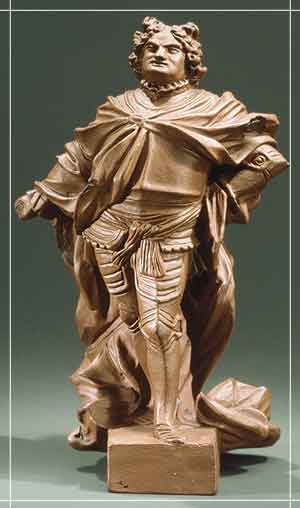
But by mid-century, Dresden became one of the most beautiful cities of Germany. After the sufferings of the Thirty Years War, Saxony was ruled by Poles; the most famous of whom was Augustus the Strong. Augustus and his son Frederick Augustus II lavished attention and money on the city, making it into a cultural, intellectual and artistic center that vied with Paris in beauty and its treasures. It was during this time that the xxx and xxx were built. And it was during this time that Johann Joachim Kandler discovered how to make fine porcelain that could compare with China.

The Seven Years War, however, brought devistation, including a 75% population decline. Napoleon fought here during his 1814 anabasis from Russia, and the Revolution of 1849 brought about bloodshed as well.

In the 19th and early 20th centuries Dresden rebuilt and rose again. The world famous Zeiss/Ikon made fine cameras there.

Augustus the strong

WW2 bombing diorama

recent

In modern times, Dresden is most famous as the site of a fire-bombing during the Second World War. Chosen because it had little military value and thus had mostly escaped bombing, British and American aircraft dropped incindiary bombs on the city center the February 13 and 14th, 1945. Kurt Vonnegut's famous novel Slaughterhouse Five describes the author's experience as a POW in Dresden during that event.

After the war Germany split into two countries, and Dresden lay in the East. There was some rebuilding during this period, but communist German Democratic Republic was largely unable to recover and rebuild. Today, after the reunification of Germany, Dresden is being rebuilt. Like much of Europe, the city structures are recreations rather than restorations, since the firebombing left the city center in little more than heaps of rubble.

     
Main Modern Links Credits